|
At UC Berkeley, I researched deep reinforcement learning for robotics in Alice Agogino's lab and adversarial machine learning in Dawn Song's lab at BAIR. My robotics work included learning policies for tensegrity robots developed with NASA Ames. I contributed to research published at ICRA, IROS, and DLSW, and co-wrote a chapter on adversarial machine learning in Artificial Intelligence Safety and Security. I also built and led the research arm of Machine Learning at Berkeley. At Bridgewater Associates, I was part of the firm's early AI lab, researching machine learning methods for macro investing. I was also a Jane Street Fellow at Depth First Learning, where I co-wrote and taught a course on the theory of deep neural networks. Most recently, I co-founded Stride Labs, where we developed cross-chain infrastructure and built and operated our own blockchain. We raised $15M and grew to over 100K users. |

|
|
|

|
Lee-Huang Chen, Brian Cera, Edward L. Zhu, Riley F. Edmunds, Franklin Rice, et al., Adrian K. Agogino, Alice M. Agogino International Conference on Intelligent Robots and Systems (IROS) Video / PDF Developed and tested locomotion strategies for tensegrity robots in a joint Berkeley–NASA research effort. Demonstrated reliable climbing on inclines up to 24 degrees using new multi-cable actuation strategies. |

|
Jianlan Luo, Riley F. Edmunds, Franklin Rice, Alice M. Agogino International Conference on Robotics and Automation (ICRA) Video / PDF Demonstrated that tensegrity robots can learn locomotion policies even with severely limited sensory inputs using Mirror Descent Guided Policy Search (MDGPS). Evaluated in simulation, with preliminary tests on physical hardware. |

|
Piyush Patil, Vinay Ramasesh, Riley F. Edmunds Depth First Learning Co-wrote and taught a class on deep neural network signal propagation via random matrix theory as a Jane Street Fellow. Depth First Learning is a collaboration between Google Brain, DeepMind, FAIR, and NYU. |

|
Riley F. Edmunds, Jianlan Luo Note Explored whether autoencoder reconstruction errors could predict transferability between reinforcement learning tasks. Evaluated the approach on MuJoCo Ant locomotion tasks and experimented with integrating it into Model-Agnostic Meta-Learning (MAML). Also built a MuJoCo simulation environment for tensegrity robot locomotion. |


|
Riley F. Edmunds, Noah Golmant, Vinay Ramasesh, Phillip Kuznetsov, Piyush Patil, Raul Puri Deep Learning and Security Workshop (DLSW) in Singapore PDF / Slides Studied the transferability and generalization of deep neural network policies. Tested this by seeing whether adversarial attacks carry from a shared Model-Agnostic Meta-Learning (MAML) model to models fine-tuned for different tasks. |
|
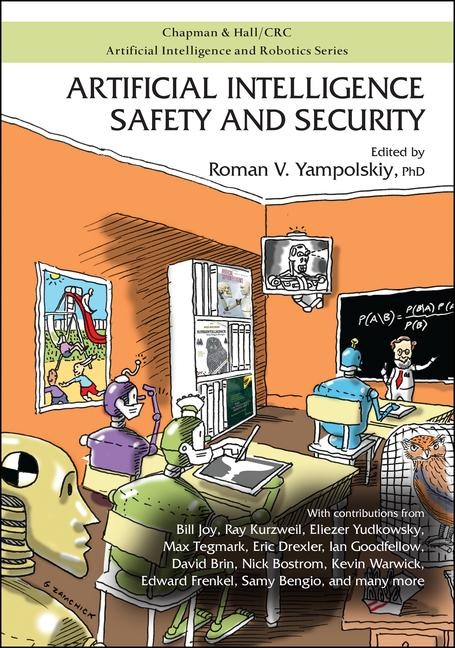
Phillip Kuznetsov, Riley F. Edmunds, Ted Xiao, Humza Iqbal, Raul Puri, Noah Golmant Chapman & Hall / CRC, Artificial Intelligence and Robotics Series Book / Chapter A chapter surveying adversarial examples in deep networks: how gradient-based attacks craft input perturbations that flip a model's prediction, how those attacks transfer across architectures, and what that implies for the robustness of deployed systems. |

|
Greg Jensen, Mark Dinner, Melissa Saphier, Riley F. Edmunds Bridgewater Associates One of my first research reports at Bridgewater. Analysis of the unprecedented speed and magnitude of policy response to the COVID-19 crisis, comparing the timeline of asset reflation across the Great Depression, Global Financial Crisis, and COVID-19 pandemic. |

|
Riley F. Edmunds, Efraim Feinstein Intuit I.A.T. Patent / PDF A hierarchical model combining a semi-supervised autoencoder with a supervised classifier for fraud detection in data with imbalanced classes and concept drift. This work resulted in U.S. Patent 11829866, granted in 2023. |
|
|
|

|
I built and led Machine Learning at Berkeley's research arm for two years. Our team published 15+ papers at NeurIPS, ICML, ICLR, and ICCV, and collaborated with BAIR, ICSI, Google Brain, and OpenAI. We also hosted talks and poster sessions with speakers including Ian Goodfellow and Andrej Karpathy. |
|
Pat Virtue, Riley F. Edmunds, Vinay Ramasesh, Renee Sweeney, Stella Yu Github We derived and implemented novel complex-valued layer functions for Convolutional Neural Networks, testing performance on frequency-domain problems: representation learning on MRI data and classification of SAR (Radar) data. |

|
Riley F. Edmunds Note A research note on neural architecture search, focused on domain-specific languages that keep the search space expressive and still tractable. |


|
Riley F. Edmunds, Rahil Mathur Note A tutorial on Bayesian Optimization and its applications in Deep Learning, with a focus on providing as much intuition behind the underlying theory as possible. |
|
|
|

|
Yulin Zheng, James Lin, Riley F. Edmunds, Kyle Provencher Video Modeled the UC Berkeley campus Campanile carillon room and keyboard in Maya, then built an HTC Vive version in Unity where a strike on each sprung key played a bell sample from the Berkeley Carillon Guild. |

|
Riley F. Edmunds, Connor Killion, Aparna Krishnan Capsule connects the world through pictures. Travel to real world locations, pick up a capsule, and view images of everywhere else it's been. When you're done, travel somewhere else, take a picture, and leave it there for future explorers. Run up your score with frequent contributions, or use those points to add new capsules to the world. Happy travels! |